
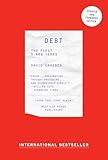
Debt : the first 5,000 years / David Graeber.
By: Graeber, David [author.].
Material type: TextPublisher: Brooklyn, NY : Melville House, [2014]Copyright date: ©2014Edition: Updated and expanded edition.Description: 542 pages : illustrations ; 22 cm.Content type: text Media type: unmediated Carrier type: volumeISBN: 9781612194196; 1612194192.Other title: Debt : the first five thousand years.Subject(s): Debt -- History | Money -- History | Financial crises -- HistoryDDC classification: 332 GRA
 | Item type | Current location | Collection | Call number | Status | Date due | Barcode |
|---|---|---|---|---|---|---|
 Books - Non Ficton
|
KH8 Senior School Library Non Fiction | Non-Fiction | 332 GRA (Browse shelf) | Available | 3KHSL000101329 |
Browsing KH8 Senior School Library Shelves , Shelving location: Non Fiction , Collection code: Non-Fiction Close shelf browser

|

|

|

|

|

|

|
||
| 330.076 HOA Economics. | 330.150 SKO The big three in economics : | 330.9 ALL Global economic history : | 332 GRA Debt : | 332 PER The new confessions of an economic hitman : | 332.015 STA Stop acting rich : | 332.024 HAL Money Magic : |
Includes bibliographical references (pages 463-500) and index.
On the experience of moral confusion -- The myth of barter -- Primordial debts -- Cruelty and redemption -- A brief treatise on the moral grounds of economic relations -- Games with sex and death -- Honor and degradation, or, on the foundations of contemporary civilization -- Credit versus bullion and the cycles of history -- The axial age (800 BC -- 600 AD) -- The Middle Ages (600AD -- 145o AD) -- Age of the great capitalist empires (1450-1971) -- The beginning of something yet to be determined (1971 -- Present)
"Before there was money, there was debt. Every economics textbook says the same thing: Money was invented to replace onerous and complicated barter systems--to relieve ancient people from having to haul their goods to market. The problem with this version of history? There's not a shred of evidence to support it. Here anthropologist David Graeber presents a stunning reversal of conventional wisdom. He shows that for more than 5,000 years, since the beginnings of the first agrarian empires, humans have used elaborate credit systems to buy and sell goods - that is, long before the invention of coins or cash. It is in this era, Graeber argues, that we also first encounter a society divided into debtors and creditors. Graeber shows that arguments about debt and debt forgiveness have been at the center of political debates from Italy to China, as well as sparking innumerable insurrections. He also brilliantly demonstrates that the language of the ancient works of law and religion (words like guilt, sin, and redemption) derive in large part from ancient debates about debt, and shape even our most basic ideas of right and wrong. We are still fighting these battles today without knowing it"--Publisher's description.
There are no comments for this item.